
Over the past few months, we have seen growing interest in rooftop solar PV systems amongst funds managing commercial and industrial (C&I) assets in Germany. It seems to be a straightforward investment case, as German commercial electricity supply is relatively expensive compared to other developed countries in Europe and it has a healthy feed-in premium scheme for C&I projects between 10-750 kWp.
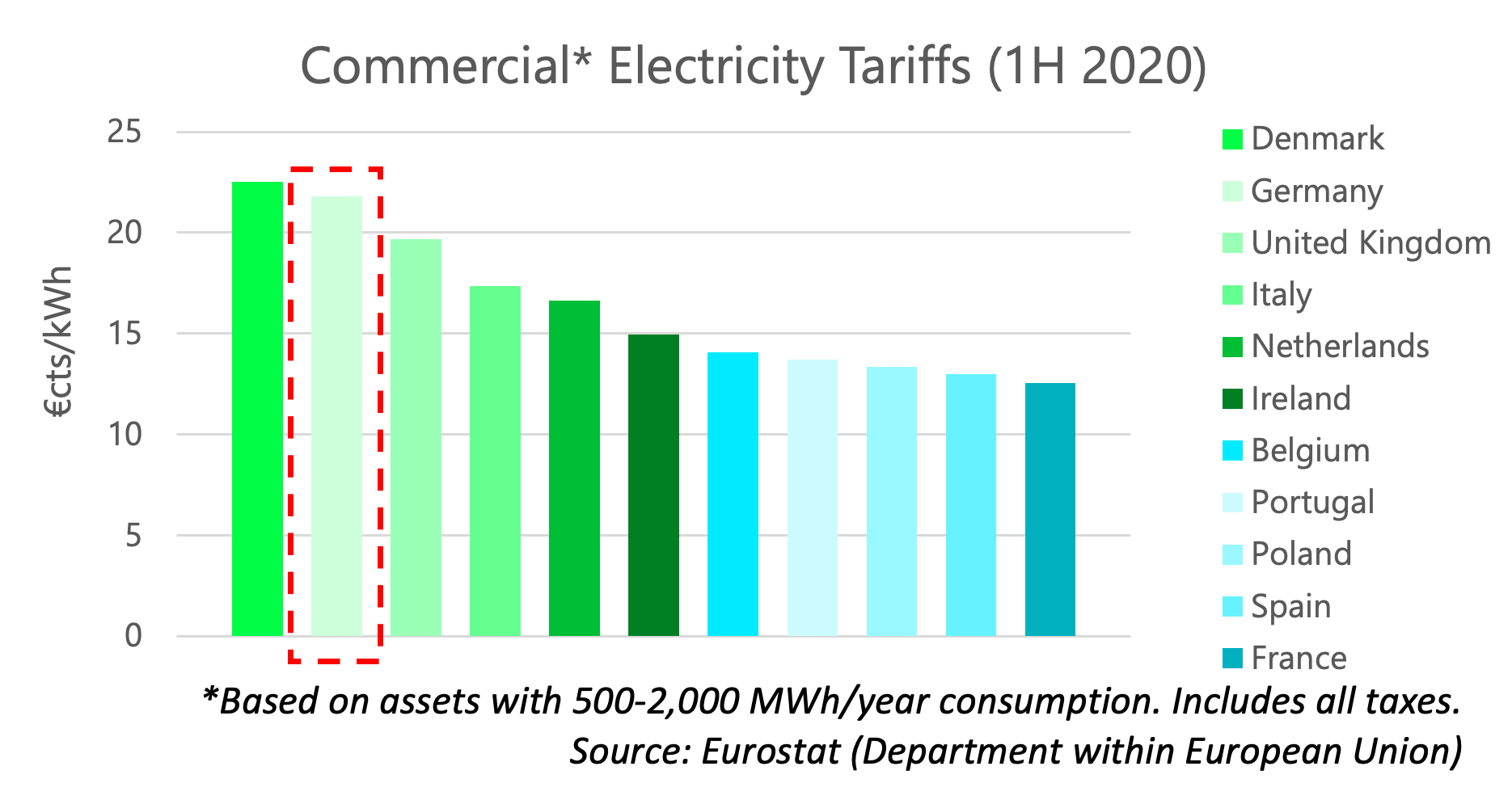
Figure 1: Commercial Electricity Tariff Across Europe
In addition to the financial returns, rooftop PV systems provide a way to reduce the asset manager’s scope 3 emissions. It can help boost GRESB scores and provide an opportunity to engage the tenant on wider sustainability topics, opening doors for further collaboration.
However, as we started looking into the feasibility of these projects, we realized German real estate investors often come up against an issue with trade tax. Installing and operating PV systems run the risk of imposing additional taxes on their entire business.
German Trade Tax – Existing Exemptions for Real Estate Funds
Companies operating in Germany are subject to both a country level corporate income tax (Körperschaftsteuer) and a municipal level trade tax (Gewerbesteuer). The corporate income tax is relatively low at 15%, but it is supplemented by a trade tax of around 10-20% depending on the municipality.
Real estate funds in Germany are in a unique position where it can obtain a trade tax deduction on their rental and capital gain income. This applies when it only participates in the business of leasing its own properties. A problem emerges when the real estate asset manager wants to operate a roof-mounted PV system and sell electricity to their tenants. This new revenue stream is subject to trade tax, and the entire fund may lose its trade tax exemption on its rental and capital gain income.
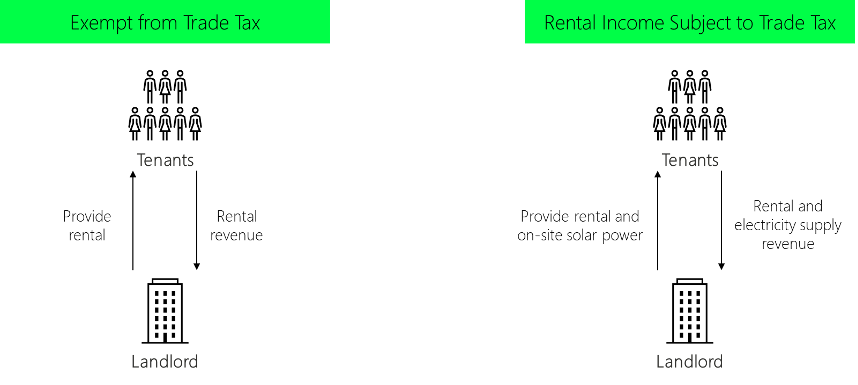
Figure 2: Impact of Electricity Supply Revenue on Trade Tax
How this is treated, and the additional liabilities, ultimately depend on the fund’s structure. While each fund’s structure will be unique, we have seen the common scenarios below:
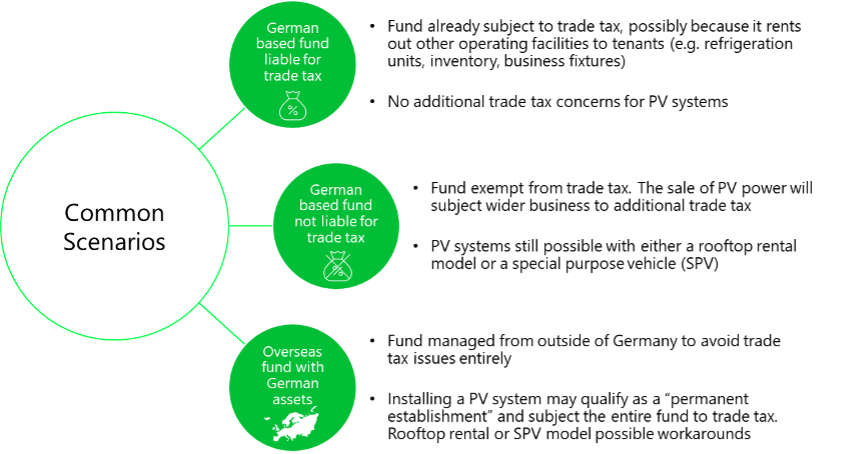
Figure 3: Common Trade Tax Scenarios for German Real Estate Funds
Roof Rental and SPV Based Business Models Provide a Solution
Two business models emerged as ways to install rooftop PV systems while mitigating tax implications for the wider business:
- Rooftop Rental – In this model, the landlord leases the rooftop to a third party company or tenant, who invests, owns and operates the system. From a financial point of view, the landlord obtains only the rental income (which is relatively minor).
However, from a sustainability point of view, it leads to a reduction in scope 3 emissions due to the tenant’s renewable energy procurement. Leasing the space out to the tenant also provides the opportunity to engage them on broader sustainability strategies on the asset.
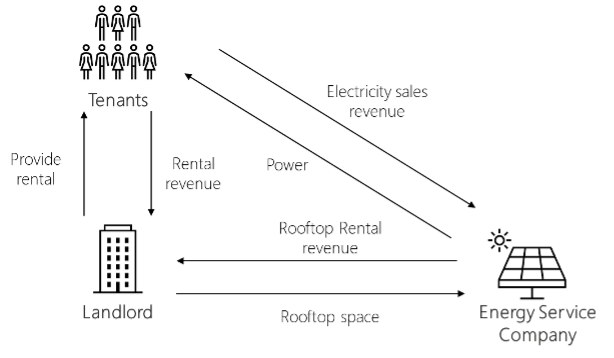
Figure 4: Rooftop Rental Model
- SPV Model – The asset manager may also set up a separate SPV to invest into, own and operate the PV system. In this scenario, only the SPV is liable to trade tax, and the rental income from the fund can retain its trade tax exemptions. The landlord will be able to obtain the electricity sales revenue and scope 3 reductions in this model. This SPV and its relationship to the landlord will have to be carefully structured to ensure the real estate fund remains exempt from trade tax.

Figure 5: SPV Model
There are some caveats with this scenario. The SPV will be considered an electricity supplier and subject to additional reporting requirements. In addition, the PV system will not qualify for the reduced 40% EEG levy on self-consumed electricity because the entity operating the PV system is different from the entity consuming the energy.
Future Developments and Renewable Energy Act (EEG) 2021
This trade tax issue has been a thorn for many real estate asset managers looking to invest in PV systems. In the latest EEG 2021, the parliament (Bundestag) asked the Federal government to table a proposal to extend trade tax exemptions to housing companies that sell onsite-PV power directly to their tenants. While this is a positive sign, it is still unclear how this will be implemented and if it will be extended to non-residential assets.
Longevity Power is a multi-disciplinary energy and sustainability consultancy which can support you in this field. We have worked with asset managers in their net-zero carbon strategies and have delivered solar PV feasibility studies and installations across Europe. For more information on our energy practice, please contact Anthony Maguire at [email protected].